











No Big Plan, Just Begin
Hey, it’s Mr. Pugo.
You can build a business for years and still feel like you’re “about to start.”
Not because you’re lazy.
Because you’re planning.
Planning feels productive. It’s organized. It’s responsible. It’s clean.
And it’s also one of the fastest ways to fall behind.
In the last couple of years working on my own business, if I had to share one lesson, it wouldn’t be a tactic, a tool, or a growth hack.
It would be this:
No big plan. Just begin.
Why big plans slow creators down
Big plans do something subtle.
They put you in “control mode.”
You start trying to control:
- every move
- every turn
- every outcome
You predict. You force. You optimize.
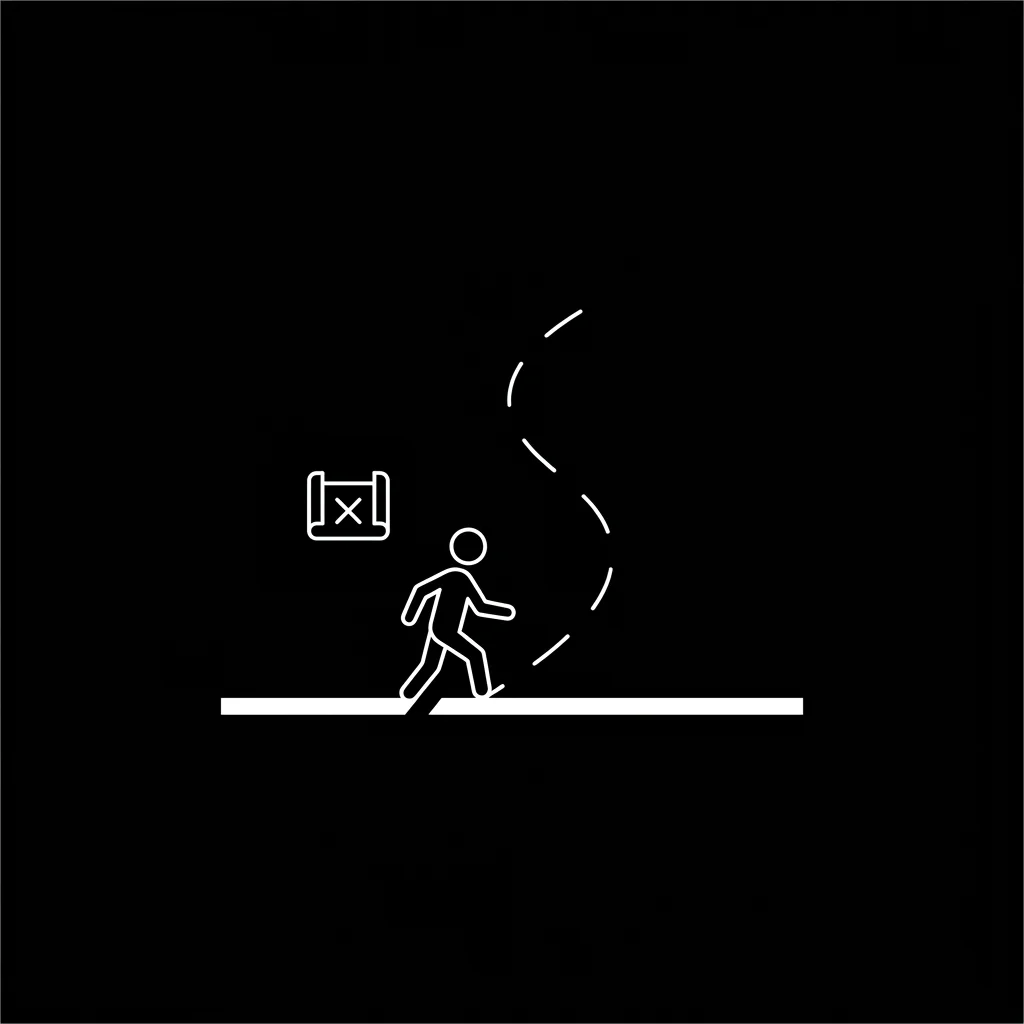
You spend time building a perfect path… for a reality that won’t follow it.
Because most of the time, things don’t go the way you planned.
Not 10% off.
More like a complete rewrite.
The real cost: speed, pivots, agility
A big plan sounds like momentum, but it often trades away the things creators need most:
- Fast progress (shipping something this week, not “someday”)
- Quick pivots (changing direction without ego)
- Agility (responding to what the market actually wants)
The plan becomes the project.
You start protecting it.
And the world changes while you’re still polishing the map.
Why creators can’t afford “perfect”
A startup with endless runway can spend months:
- researching
- forecasting
- building decks
- planning roadmaps
They can burn money while they learn.
Creators can’t.
Creators usually have a tighter reality:
3–6 months of negative revenue before the pressure gets loud.
That constraint isn’t a disadvantage.
It’s clarity.
It forces you to focus on what matters:
proof, not plans.
What to do instead (a creator-friendly loop)
Instead of a master plan, use a simple loop that keeps you moving:
- Start Open the thing and make the first version.
- Ship small Put something in front of real people, even if it’s rough.
- Listen Watch what they do, not what you hope they’ll do.
- Adjust Keep what works. Cut what doesn’t.
- Repeat Run the loop again—faster.
You don’t need a perfect strategy to begin.
You need a direction and a cadence.
“But I need a plan…”
You don’t need no plan.
You need a small plan.
A plan that fits on a sticky note.
Something like:
- Who is this for?
- What problem does it solve?
- What’s the smallest version I can ship?
- What do I want to learn this week?
Anything beyond that is usually just anxiety dressed as productivity.
The point
Big plans are procrastination in a suit.
They make you feel safe.
But they delay the one thing that creates real clarity:
contact with reality.
So if you’re stuck planning, try this instead:
Build the smallest version.
Ship it.
Let the market respond.
Then move.
Because in business (and especially as a creator), momentum doesn’t come from seeing the whole path.
It comes from taking the next step.
A punch to end it
Don’t build the plan. Build the proof.
Proof pays.
Plans don’t.
— Mr. Pugo